Apartments That Accept 2x Income in Fort Worth

Placement with communities using a 2x or 2.5x income multiple, and program routes when the multiple is out of reach.

Free to rentersCriteria confirmed & datedEnglish & Spanish
Pay stubs and VA award letter on a Fort Worth kitchen table next to a calculator for rent qualification

Licensed

Texas Real Estate Commission

Brokerage

Spirit Real Estate Group, TREC #562021

Cost to you

$0, communities pay the referral fee

Response

Under 60 minutes during posted hours

Why income denials happen

Most income denials are a documentation problem

Most renters denied on income were countable at a different property, or at the same property with income they were never asked about.

3x is a default, not a requirement

Tarrant County has communities running 2x and 2.5x, and they aren't concentrated in any one price tier. The multiple is set by the management company, and it moves with occupancy.

Income you already have is going uncounted

VA disability, SSI, child support, self-employment income, and combined household income are countable at many Fort Worth properties once they are documented the way the property wants.

Irregular pay fails a stub-based check

Shift work at the airport, tips, seasonal hospitality pay, and 1099 income all clear the math and still fail a two recent paystubs requirement. That's a documentation problem, not an income problem.

So we work the multiple and the documents together

We find the 2x and 2.5x communities, confirm which income sources each one counts, prepare the document set that proves irregular pay, and identify where a guarantor or a co-applicant closes a gap the math really can’t.

Fort Worth Second Chance Team places renters at Tarrant County apartments that use a 2x or 2.5x income to rent multiple instead of the standard 3x. Licensed under, veteran-operated, and free to renters, the community pays a referral fee at lease signing.

If your income clears the math but not the multiple a property picked, you're at the wrong property. About half of Fort Worth’s 144,570 rental units sit in the $1,001-$1,500 band, and many of those communities run lower multiples that most apartment searches never surface.

Here's exactly how we find those properties and get renters approved.

The 3x standard is a convention, not a requirement

The strict three times income standard is a convention, not a law. Communities across Tarrant County, from garden-style apartments along East Berry Street to Class A lease-ups near Alliance, use 2x or 2.5x multipliers instead. Searching as though the 3x rule is universal shrinks your options by a third before you even apply.

Fort Worth apartments average $1,438 overall in 2026, with one bedrooms at $1,259 and two bedrooms at $1,590. Requiring three times those amounts prices out renters who qualify on the math. The problem is often what the landlord counts as valid cash flow, not the dollar amount itself.

VA disability, child support, and 1099 business income are valid at properties that document them. Shift pay from employers like American Airlines, BNSF Railway, and Amazon Alliance annualizes correctly with a twelve month earnings summary instead of two pay stubs.

A guarantor program covers the gap where the multiple really can’t be met. Below we break down which of the three routes will reach the rental price you want.

Gross, not take-home

Income multiples run on gross monthly income, the number before taxes and deductions. This single detail changes the arithmetic entirely. Renters routinely calculate against take-home pay, come up short, and settle for units they don't want.

Let’s look at a concrete example using $3,600 in gross monthly earnings.

Community RequirementMaximum Allowable RentMarket Context
3x Income$1,200Very limited options in most cities.
2.5x Income$1,440Right at the Fort Worth average of $1,438.
2x Income$1,800Opens up premium properties.

Fort Worth Second Chance Team calculates these figures on every file. Three very different searches stem from one financial profile. We confirm directly with each property whether it will gross up non-taxable income during the application, a policy that matters heavily for veterans at NAS Fort Worth JRB receiving VA disability, individuals on SSI, and parents receiving child support.

Income sources that count toward a Fort Worth lease

Gathering paperwork is the most tedious part of any move, but the right documents make or break an application. Here's what Fort Worth properties need for each income type.

Standard and Shift Employment

Salaried or hourly workers with steady hours provide recent pay stubs alongside a standard employment verification. This route is simple and gets approved quickly.

Renters with overtime, shift differentials, or per diem pay should know these are countable at most properties when they are ongoing rather than occasional. Bring a twelve month earnings summary rather than just two recent stubs, so the consistent pattern is visible to the leasing agent. This applies to shift workers at Lockheed Martin, Bell Textron, JPS Health Network, and other Tarrant County employers with irregular schedules.

Government Benefits and Support

Applicants receiving VA disability, SSI, or SSDI should bring official award letters. Ask the property manager about grossing up these tax-free benefits, some Tarrant County management companies gross up non-taxable income when calculating the multiple, which can move a renter from a 3x denial into 2.5x approval range.

Child support is countable where it's well documented and consistent. A formal court order plus a state payment record is what makes this income credible to landlords.

Self-Employment and Household Income

Self-employed business owners and 1099 contractors face the toughest documentation burden. Landlords require specific financial documents to verify business revenue.

  • Tax Returns: A prior year federal tax return with Schedule C is the starting point.
  • Bank Statements: Three to six months of business bank statements are mandatory at most properties to show cash flow.
  • Payment Records: A 1099-K from your payment processor strengthens the file if you take credit cards.
  • Matching Deposits: Consistent deposits matching your tax return matter more than the return alone.

We verify how each property handles combined household income before you apply with a partner. Most communities qualify based on the household total, but some require each adult to meet a portion independently. That one check saves time and application fees.

Three routes when income falls short of 3x rent

Three paths exist when income falls short of a property’s posted multiple. Each carries different costs.

  • A lower multiple community: A 2x or 2.5x community costs nothing extra. If a 2.5x community in the right area has a unit you like, that's the clear answer.
  • A co-applicant: Adding a co-applicant combines income at no fee. This path commits another person to the lease and requires them to pass screening, which works where the relationship and timeline support it.
  • A guarantee: Institutional lease guarantors like TheGuarantors, Rhino, and Leap Insurance cover the gap. A guarantee program typically costs 70 to 110 percent of one month’s rent as a one-time premium (2026 pricing).

A guarantee works anywhere corporate criteria apply, especially at properties managed by Greystar, RPM Living, or Knightvest that don't run a lower multiple. The goal is to price these options against the specific rent rather than defaulting to the one that's easiest to arrange.

How the approach compares

FeatureTypical apartment searchFort Worth Second Chance Team
Income multiple confirmedNot checked before applyingConfirmed with the property and dated
nonstandard income countedOften ignored or disqualifiedVA disability, SSI, child support, and 1099 documented and presented
Application fees wasted$50-$100 per denial, often 4-6 triesOne or two targeted applications
Guarantor programs matchedRenter finds them independentlyTheGuarantors, OneApp Guarantee, and others matched to each property
Cost to renterVaries by locatorFree, community pays a referral fee at lease signing

We put the total cash needed at signing on every recommendation so the comparison is real. That's how our second chance apartment locating in Fort Worth works on every file.

Fort Worth Second Chance Team runs this search across communities in North Fort Worth, the Near Southside, Meadowbrook, and everywhere in between, matching income documentation to each property’s criteria before you apply.

Call the office today to review your income profile and get a list of 2x and 2.5x communities that fit your budget. Free to you, response in under 60 minutes during posted hours.
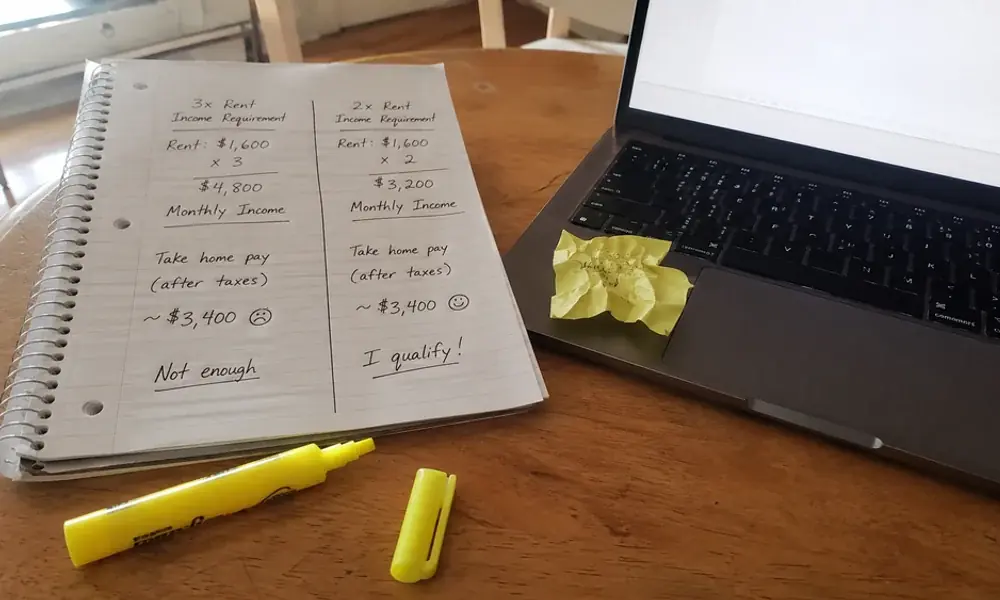
Notepad comparing 3x and 2x rent to income requirements for Fort Worth apartment leasing

What each income to rent multiple gets you

Last verified: July 2026

Maximum rent the multiple permits, before the property's other criteria. Fort Worth averages $1,438 overall, 1BRs $1,259 and 2BRs $1,590. Each community sets its own multiple and decides which income sources it counts. Meeting a multiple doesn't guarantee approval.

$2,500

At 3x rent
$833
At 2.5x rent
$1,000
At 2x rent
$1,250

$3,000

At 3x rent
$1,000
At 2.5x rent
$1,200
At 2x rent
$1,500

$3,500

At 3x rent
$1,167
At 2.5x rent
$1,400
At 2x rent
$1,750

$4,000

At 3x rent
$1,333
At 2.5x rent
$1,600
At 2x rent
$2,000

$4,500

At 3x rent
$1,500
At 2.5x rent
$1,800
At 2x rent
$2,250

Why Fort Worth renters work with us on income qualification

3x is a convention, not a rule

Plenty of Tarrant County communities use 2x or 2.5x. Searching as if 3x were universal cuts your reachable rent range by a third for no reason.

We count nonstandard income

VA disability, SSI and SSDI, child support, self-employment, and combined household income are countable at properties that will document them. We track which ones do.

Irregular pay annualized right

Shift work, overtime, per-diem, and seasonal income read badly on two pay stubs and correctly on a twelve month record. We build the longer view.

Three routes, priced

A 2x community, a co-applicant, or a guarantee. Which is cheapest depends on the rent, so we compare rather than default.

Gross, not net

Multiples run on gross income, and non-taxable income is grossed up at some properties. Renters routinely underestimate what they qualify for.

Free to you

No fee for the research or the placement. The community pays a referral fee at lease signing.

How we match renters to 2x and 2.5x communities

Step 1

Count everything that counts

VA disability, SSI and SSDI, child support, 1099 and self-employment, plus combined household income, all countable where a property will document them.

Step 2

Document it properly

Award letters, twelve month earnings summaries, and bank statements let a property annualize instead of guessing from two stubs.

Step 3

Find the right multiple

We keep a list of Tarrant County communities using 2x and 2.5x, confirmed with the property and dated.

Step 4

Compare the three routes

A lower multiple community, a co-applicant, or a guarantee, priced side by side against the rent you want.

Start your search

Free to you, no obligation, and no charge for the criteria research. Response in under 60 minutes during posted hours.
Fort Worth inventory at every tier

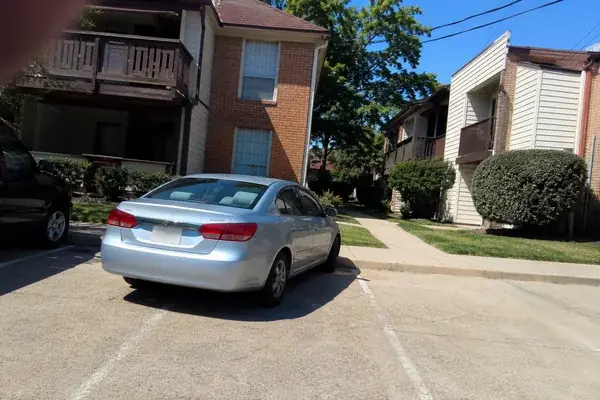
A record doesn't limit you to older or cheaper buildings. Approval depends on criteria and accepted programs, so we work garden-style, mid-tier, and Class A alike.

Fort Worth rental inventory example 1Fort Worth rental inventory example 2Fort Worth rental inventory example 3Fort Worth rental inventory example 4

Quick 60 second form

Second chance apartments in Fort Worth made simple

Answer what applies and we come back with your Fort Worth options in 24 to 48 hours.

Questions renters ask about income requirements

My income is under 3x the rent. Is that automatic denial?
No. 3x is a convention, not a rule, and Tarrant County has communities using 2x and 2.5x. Many properties will also count VA disability, SSI, child support, self-employment income, or combined household income once it's documented. A guarantor program covers the gap where the multiple really can’t be met.
Does VA disability count as income?
At most properties that will document it, yes. Bring the award letter. Some communities also gross up non-taxable income when calculating the multiple, which can move you into range without anything else changing. It's worth asking specifically rather than assuming.
Do they use gross or net income?
Gross, almost always. Renters frequently calculate against take-home pay and conclude they don't qualify when they do. If your gross is $3,600 a month, a 3x community reaches $1,200 rent and a 2x community reaches $1,800, a very different search.
How do I prove income if my hours change every week?
With a longer window. A twelve month earnings summary, an employer letter stating your scheduled hours and rate, and bank statements showing consistent deposits let a property annualize rather than judging off two stubs. Overtime and shift differential generally count where they read as ongoing.
Can I add a roommate to qualify?
Usually. Most communities qualify on combined household income, though some require each adult to independently meet a portion of the multiple. That difference matters a lot, so we confirm the property's rule before you plan around a co-applicant.
Is a guarantor cheaper than finding a 2x community?
Rarely. A guarantee costs roughly one month's rent as a one-time premium, while a lower multiple community costs nothing extra. The guarantee is the answer when no suitable 2x community fits your other criteria, or when the gap is too wide for a lower multiple to close.

Free renter tool

Income Multiple & Rent Range Calculator

See what rent your documented income reaches at a 3x, 2.5x, or 2x requirement , and what a guarantor or co-applicant changes.

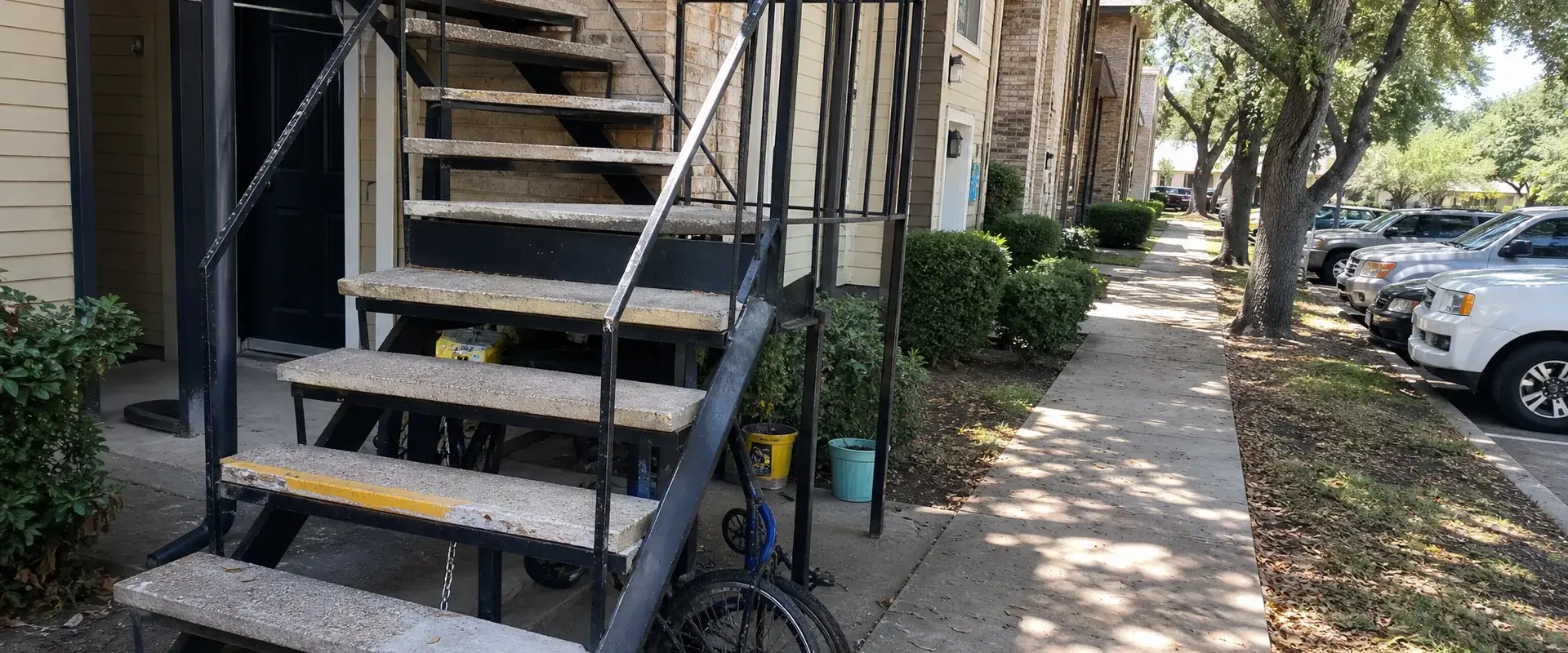
Fort Worth apartment breezeway stairs with painted metal handrails against a red brick wall

Find out where your file already fits

Send us your situation and we'll come back with Fort Worth communities whose criteria permit it, the total cash to move in, and what to expect at each. Free to you.

Free to renters. Communities pay the referral fee at lease signing. We don't guarantee approval; every screening decision belongs to the community.