Income-restricted housing is one of the least clearly explained parts of the Fort Worth rental market. Fort Worth Second Chance Team locates apartments within this inventory across Fort Worth and Tarrant County at no cost to renters, and the gap between earning a fair wage and affording a local apartment keeps widening.
We verify which AMI band fits your household, confirm current waitlist status with each property, and run a parallel market-rate search when your move-in deadline is short.
What Does Income Restricted Housing Actually Mean
Our clients often assume that meeting an income requirement guarantees an apartment approval. Income-restricted and tax-credit communities, including Section 42 properties, only cap what a renter can earn, the limit is a ceiling, not a floor. We always warn folks that standard criminal and rental history screening still applies right on top of that income test. Applicants face two gates instead of one, and they regularly clear the first just to get stopped at the second without understanding why.
We break down the actual barriers into a few simple categories:
- The Income Ceiling: HUD strictly defines the maximum income allowed based on local data.
- The Background Check: Criminal records are still heavily scrutinized by property managers.
- The Credit Review: A low credit score can still trigger an instant denial.
- The Rental History: Past evictions remain a massive roadblock for most applicants.
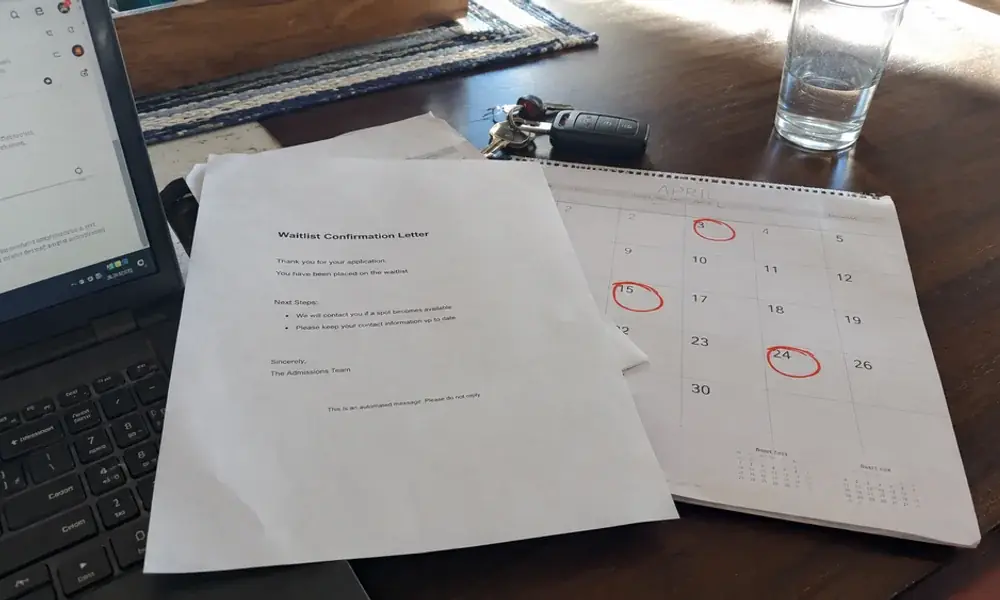
Waitlists are the real constraint in this entire system. We tracked recent 2026 data from USAFacts showing that the average wait time for subsidized housing is 25 months nationwide. A two-year wait will rarely clear inside a standard move-in deadline, which is the single most important thing to know before building a plan around this route.
We locate units within this limited inventory and set honest expectations about the timeline. Eligibility is determined by the property and the administering agency, TDHCA oversees the LIHTC program statewide, while Fort Worth Housing Solutions administers local public housing and voucher programs. We run a standard market-rate search alongside the waitlist when a move-in deadline is short, covering tax-credit properties from east Fort Worth and Stop Six through the Alliance corridor. This dual approach saves everyone a lot of unnecessary stress.
How the bands work
Exactly how these limits take shape. Limits are set against the Area Median Income (AMI) and scale directly with household size. We see a lot of confusion when a one-person household and a four-person household applying to the same property face totally different caps. A family that's over the limit at a one bedroom count might actually fall under the limit at a two bedroom count.
We put together this quick breakdown of common AMI bands:
| Income Band Tier | Percentage of AMI | Typical Renter Profile |
|---|---|---|
| Extremely Low | 30% of Median Income | Fixed-income seniors or minimum wage earners |
| Very Low | 50% of Median Income | Entry-level workers or single-income families |
| Low | 80% of Median Income | Moderate-income households squeezed by high rents |
The rent is generally fixed by the specific program rather than set by the open market, which is the trade-off you get for the income cap. We always remind people that utility allowances factor in, so the final number paid out of pocket and the number on the rent roll aren't always the same.
None of that math is guesswork on your side, because the property and the administering agency calculate it all for you. We specialize in working out which specific band fits your situation before you spend weeks on applications that were never going to work out.
Why Credit and Background Screening Still Applies
The background check is where the most disappointment happens for hopeful renters. We watch people pass the initial income test, completely unaware that approval is still miles away. Most tax-credit communities, garden-style complexes, mixed-income developments, and LIHTC properties alike, operate a strict tenant selection plan covering rental history, credit, and criminal background, applying it the same way a market-rate property would.
We tell clients that a renter with a recent eviction filing has the same criteria problem they would face anywhere else, just with a massive waitlist attached.
A common misconception is that affordable housing ignores bad credit. In reality, properties follow strict guidelines, though ‘low-barrier’ communities might limit eviction lookbacks to just 12 months instead of the standard five to ten years.
Knowing those lookback windows right at the start is completely essential. Fort Worth Second Chance Team’s barrier work involves documenting a disposition, settling an old balance, and identifying communities whose lookback window actually clears the eviction filing.
The strategy for clearing those barriers remains exactly the same for subsidized units as it's for luxury apartments. We run that detailed criteria research on income-restricted properties exactly as we do on market-rate ones.
Running Waitlist and Market-Rate Searches Together
Waiting for an affordable unit is a reasonable long game if a move-in date is truly flexible and the income fits a specific band. We'll gladly help you join those waitlists properly by focusing on three essential elements:
- Complete Applications: Missing details cause instant rejections.
- Correct Documentation: Pay stubs and tax returns must perfectly match.
- Realistic Expectations: Timelines are often measured in years.
Treat the waitlist as a background process and run a standard market-rate search in parallel if your move-in date is fixed. Our parallel searches always include communities that require 2x or 2.5x the monthly rent in income. These specific properties frequently reach the same affordable rental rates from a different direction.
July 2026 Apartment List data shows that Fort Worth market-rate units lease in an average of 30 days. New supply like the 1,785-unit Westside Village development adds inventory and often brings softer initial criteria during lease-up. Tax-credit properties, by comparison, can leave applicants stuck in limbo for months.
Running both options side by side is the only version of this process that respects a fixed move-in date, and it costs you nothing either way.
Send us your situation and Fort Worth Second Chance Team will come back with income-restricted and market-rate communities across Tarrant County whose criteria already fit it. Free to you, the community pays the referral fee at lease signing.