
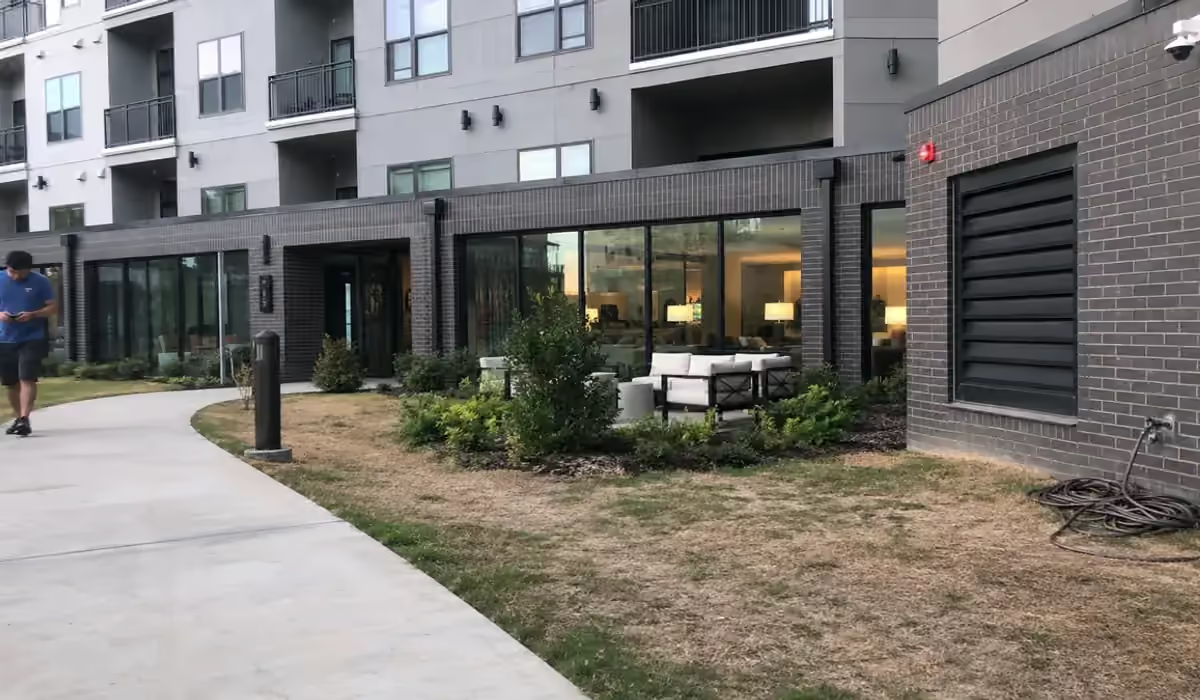
Bad credit doesn't rule out new or Class A buildings, and we search them across Fort Worth and Tarrant County, free to you. We're veteran run and licensed in Texas, brokered by Spirit Real Estate Group (TREC #562021). We keep our own database of the Class A communities that take guarantor programs, and we update it as we talk with leasing agents every day. Then we send you the ones whose criteria fit your file.
Found a floor plan you like in a new Class A building, then got nervous about the background check? Plenty of renters assume a low credit score or an eviction filing rules out anything with a $1,900 price tag. So they don't apply, and they skip the new buildings that are running concessions and taking guarantee programs.
A low score changes how you apply more than where you can live. At many Class A properties, an accepted guarantor program is the way in.
Approval depends on how property managers check applications and which third party programs they accept. Both change over time, and the property makes the final call.
Why New Lease Ups Approve Applicants Older Properties Decline
Lots of renters think one mark on their record limits them to older buildings. That assumption costs them.
Searching for luxury apartments with bad credit works best when you aim at new lease ups. It mostly comes down to money:
- Pressure to Fill Up: Lenders want new buildings to fill up fast.
- Guarantee Programs Accepted: Many properties accept third party guarantee services like TheGuarantors, OneApp Guarantee, or Leap.
- Big Early Concessions: Lease ups often offer up to two months of free rent early on.
Dallas-Fort Worth has a lot of new apartments opening. RentCafe expected close to 29,000 new apartments across DFW in 2025, second only to the New York metro (RentCafe, 2025), and many are still leasing up.
Big projects keep coming too, like the $1.7 billion Westside Village near the Cultural District, which broke ground in March 2026 and plans 1,785 units in phases through 2035 (Fort Worth Report, 2026).
The lease up window, and why it closes
A brand new property starts with hundreds of empty units and a nervous lender who wants them filled fast. That pressure shows in how the leasing staff works.
Management companies set criteria at the softest end of what they'll allow, and the concessions get bigger.
Six weeks free, waived admin fees and reduced deposits are common offers during this stretch.
Apply early if you can. The first few months after a building opens are often the best stretch, since managers are pushing to hit their first occupancy goals.
Then the building fills. Owners tighten criteria back to their normal standards, and concessions shrink to nothing.
The system can turn down the same file in November that it would have approved in March. Nothing about the applicant changed.
That's why timing matters at least as much as your credit score here. Should you wait until your score improves? Often, no.
Net effective rent, not the headline
Concessions usually get advertised as one big number. It's worth less than it sounds.
Six weeks free on a $1,900 unit is worth roughly $2,600. Spread that across a twelve month lease, and your net effective rent comes to $1,680 a month.
That simple math shows two things:
- Net Effective Rates Matter: Over two years, a $1,750 unit with no concessions can beat a $1,900 unit offering six weeks free.
- Renewals Bring Sticker Shock: That concession goes away completely at renewal time.
Your rent jumps right back to the full price. At $1,900, that's $220 more a month, so budget for it from the day you sign.
| Rent Scenario | Monthly Payment (Year 1) | Monthly Payment (Year 2) | Jump at Renewal |
|---|---|---|---|
| $1,900 (6 Weeks Free) | $1,680 (Net Effective) | $1,900 (Base Rate) | $220 |
| $1,750 (No Concessions) | $1,750 (Flat Rate) | $1,750 (Base Rate) | $0 |
We put both numbers on every property we recommend, along with an estimate of the cash needed at signing, including any guarantee fee.
A lease guarantee through TheGuarantors or OneApp Guarantee costs about one month’s rent, paid once. It rises with the rent, so check it before you pick a floor plan.
| Rent | Approximate guarantee fee | For reference |
|---|---|---|
| $1,453 | ≈ $1,453 | Fort Worth average (RentCafe, August 2026) |
| $1,737 | ≈ $1,737 | Midrange to entry Class A |
| $1,900 | ≈ $1,900 | Common Class A one bedroom |
| $2,200 | ≈ $2,200 | Class A two bedroom |
| $2,600 | ≈ $2,600 | Larger Class A units |
A conditional approval can add a monthly risk fee or a bigger deposit, even with a guarantee. Ask before you sign. A $75 monthly risk fee is $900 a year, and that changes the math a lot.
Timing changes the cash at signing too. Take the same $1,900 unit at a building that's already full. The admin fee comes back, the deposit goes back to full price, and there's no concession. The guarantee fee stays at about $1,900. You pay more at signing and $220 more each month for the same kind of building and the same approval tool.
Two Approval Paths Across Fort Worth
Big corporate Class A properties are run by firms like Greystar, RPM Living, and Willow Bridge. They run many of the Class A buildings in North Fort Worth, the Alliance corridor, and the Cultural District. These buildings use strict corporate criteria, and a computer does the screening.
Nobody on site will bend a cutoff for you. But whether they take a guarantee program is a set policy, and it's applied the same way every time.
A third party guarantee can get a file approved that the system would otherwise turn down. The cost is easy to predict, and the route is open at almost every rent level in the Class A tier.
Locally managed buildings are a different animal. You'll find more of them in older neighborhoods across east Fort Worth, Meadowbrook, Woodhaven, Poly, Como, and the south side.
At these properties, the local manager can actually make the call. A clear letter of explanation gets read by a real person who's allowed to weigh what happened.
Both paths can lead to an approval. Which one works best comes down to what's on your file:
- Number Problems: Low scores or high debt compared with income point toward the corporate path with a guarantor program.
- Problems With a Story: Medical debt, a past dispute, or unusual income sources point toward a local manager who can decide.
- Urgency: A local manager can decide the same day. Corporate screening usually takes 24 to 72 hours.
We lay out both options so you can see which one fits.
When the guarantee fee is worth paying, and when it isn't
A fee near a full month's rent makes sense when the building solves a real everyday problem:
- When your commute or school district is fixed: Living in the Alliance corridor or Near Southside often means a Class A property. The fee pays for a location you need, and the nicer finishes come with it.
- When a concession offsets most of it: A new building running six weeks free plus waived fees can cover all of the fee.
- When the alternative is worse: A doubled deposit at a midrange property that still turns you down isn't a savings.
Skip it in these cases:
- When a midrange property fits your file: Don't pay to solve a problem you don't have.
- When the fee repeats at renewal and you plan to stay: Ask both the property and the guarantee program about renewal fees before you sign.
- When the rent is a stretch anyway: A guarantee doesn't make an unaffordable rent affordable. If the program ever pays on your behalf, it can come after you for the money.
We match your situation with the type of property most likely to say yes. Every option comes with an estimate of the cash to move in.
Tell us what's on your file, and we'll estimate the cost of the Class A options that fit it.

