Fort Worth Second Chance Team places renters who owe a prior landlord into apartments across Fort Worth and Tarrant County at no cost to the renter. As licensed locators brokered by Spirit Real Estate Group, we research each community’s balance policy and confirm it with the property before you spend an application fee.
A forgotten balance can sink an application before it gets a fair review because the debt often hides outside standard credit reports. Whether you rent near the Stockyards, along the I-30 corridor, or anywhere in Tarrant County, the screening process works the same way.
Below we break down where a balance surfaces, what each property posture requires, and how to sequence your search when the deadline is tight.
How rental debt surfaces during tenant screening
An unpaid balance rarely hides where you expect it to. The first place it usually appears is during a simple rental-verification call.
A debt can completely bypass the major credit bureaus and still ruin an application. A leasing agent dials the prior property manager, asks about past dues, and gets a direct answer. Management platforms like RealPage and Yardi also feed tenant data into specialty screening databases automatically.
Experian RentBureau is the largest rental database in 2026 for logging lease end dates and outstanding balances. Property managers typically find old debts through a few specific channels. Business owners acting as guarantors should pull a specific tenant screening report, rather than a generic credit check.
These are the primary channels Fort Worth property managers use to find a balance:
- Direct Landlord Verification: A quick phone call to your previous leasing office is often all it takes.
- Experian RentBureau: This specialty agency tracks your exact rental history, including unpaid balances and eviction records.
- Collection Agency Tradelines: Our contacts at firms like Advanced Collection Bureau confirm they report residential rent debts bi-weekly to Equifax and TransUnion.
- The Application Itself: Most standard lease forms ask outright if you owe money to a prior landlord.
Communities generally take one of three distinct postures regarding these balances.
We categorize the market by these postures so you stop applying where the answer will always be no. Your approval chances depend heavily on the dollar amount, the age of the debt, and your supporting documents. Pairing an open balance with a guarantor through programs like TheGuarantors or OneApp Guarantee can shift your file into a better category.
Getting the paperwork right
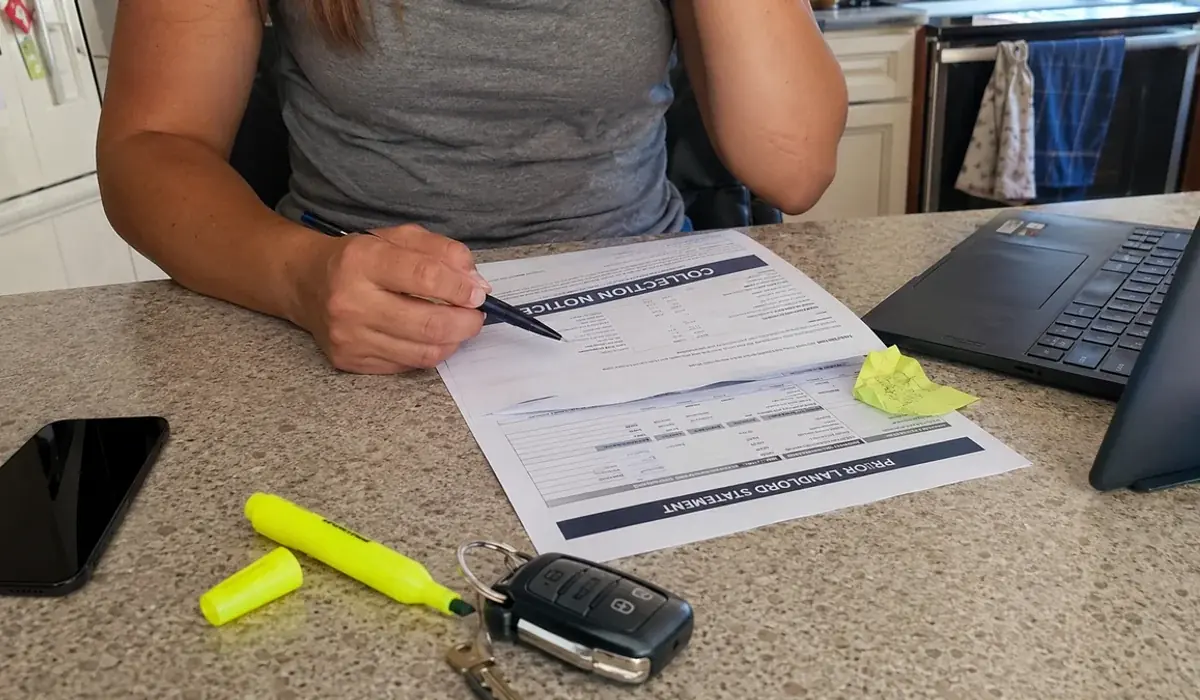
Poor paperwork costs renters hundreds of dollars in wasted application fees. Paying a balance without receiving proper documentation leaves you stranded at the leasing desk. Screening files don't update the moment your funds clear the bank.
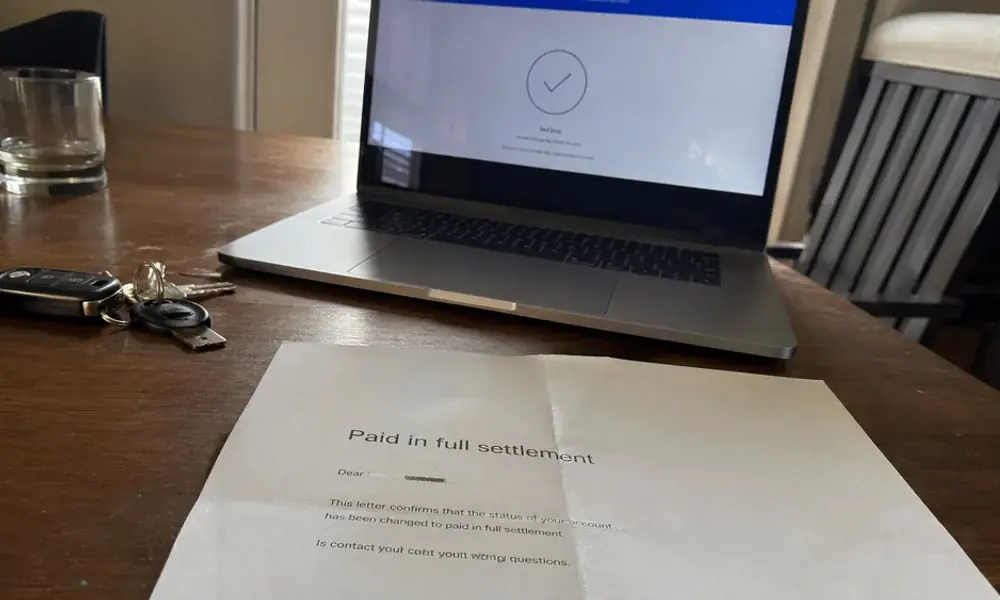
Our team advises getting the exact wording of your satisfaction letter agreed upon before you send a single penny. You need a document on official letterhead stating the exact amount, account number, and date. The language must clearly state the debt is either “paid in full” or “settled in full.”
| Resolution Type | Required Documentation | Key Warning |
|---|---|---|
| Paid in Full | Official letterhead stating “paid in full” | Don't pay until wording is agreed upon |
| Payment Plan | Signed terms and recent receipts | Late payments immediately void the deal |
| Settled Debt | Letterhead showing a zero balance | Forgiven amounts over $600 risk a 1099-C |
We recommend asking for an itemized breakdown of the charges before making any offers. Landlords often lump rent arrears with questionable cleaning fees or damages that you can easily dispute. If your account has moved to a third-party collection agency, you're now dealing directly with them instead of the property manager.
We always warn clients about the tax implications of settling an old account for less than the full amount. If a collection agency forgives more than $600 of your debt, the IRS might require them to issue a 1099-C tax form. You must factor that potential tax hit into your financial planning for the year.
Send a formal validation demand if the debt sits with a collector. The Fair Debt Collection Practices Act gives you a strict thirty-day window to force the agency to prove you owe the money. This step protects you from paying fraudulent or expired debts.
What each balance posture requires
Fort Worth Second Chance Team evaluates property guidelines daily to track what leasing managers require. Different communities handle past due accounts in different ways. You'll encounter three main policy postures during your search.
- Zero balance required: Only a formal satisfaction letter will open this specific gate. Property managers will rarely bend this rule, even if you offer a wealthy co-signer. Once you provide that proof, a massive portion of the housing market instantly becomes available to you.
- Payment plan accepted: We find this flexibility at locally managed properties and mid-tier communities along Camp Bowie, Berry Street, and the Near Southside where an actual person reviews the application. These managers want hard evidence, including the written plan and two or three payment confirmations. They also need a current income situation proving you can afford both the debt payments and the new rent.
- Open balance considered: Show a gross income of at least three times the monthly rent to satisfy this requirement. A small balance from four years ago combined with clean recent rental history often clears the desk. Under the Fair Credit Reporting Act, old rental debts fall off your record after seven years.
A large, recent debt from 2025 alongside a thin income file is the hardest combination to place. A corporate guarantor service like TheGuarantors or OneApp Guarantee can secure approval in these cases. The cost is typically one month of rent, insuring the landlord against future losses.
The upfront cost is real, but it secures housing immediately and opens inventory at every price tier, including Class A lease-ups in North Fort Worth and Alliance. You can then focus on rebuilding your financial profile in your new home.
When your move-in deadline is tight
You can’t put your housing search on hold while a settlement processes. If you've a move-in deadline, you must run both tasks in parallel. Application processing for a standard apartment takes two to three business days, but manual underwriting for an open balance often takes a full week.
| Application Type | Typical Processing Timeline |
|---|---|
| Standard Apartment Lease | 2 to 3 business days |
| Open Balance Manual Underwriting | Up to 7 full days |
| Texas Eviction Appeal Window | 5 days maximum |
Our strategy involves building a shortlist exclusively from open balance considered communities and guarantee-accepting properties. This gives you live options immediately while the settlement paperwork moves at its own sluggish pace. Court deadlines completely change the urgency and sequence of this process.
Tell us about any pending legal dates during your very first message. Under SB 38 (effective January 2026), Tarrant County JP Courts set an eviction trial 10 to 21 days after filing, and you've five days to appeal. Because time is so important, the search must shift to immediate move-in inventory and prescreened criteria to avoid losing days to a denial.
We aren't attorneys and can’t provide legal advice for your specific case. If you face an active lawsuit, you should contact Legal Aid of NorthWest Texas or a private attorney right away. They serve low-income residents across 114 counties and operate a direct legal assistance hotline at 888-529-5277.
Our job is to handle the housing logistics while your legal team handles the courtroom. Proper sequencing means you've a safe place to land, no matter how the case resolves. A structured approach removes the panic from an incredibly stressful timeline.
Finding apartments with money owed to a landlord requires strategy, but it's entirely possible with second chance apartment locating in Fort Worth that confirms each community’s balance policy first. Contact our office today to start building your custom property shortlist.
How we compare
| Feature | Typical locator | Fort Worth Second Chance Team |
|---|---|---|
| Balance posture confirmed with property | Rarely verified | Confirmed and dated per community |
| Criteria reverified | Not tracked | Quarterly |
| Cost to renter | Varies | $0, community pays the referral fee |
| Languages | English | English and Spanish |