

Renters land on this fork constantly, usually with a move-in date already set. The choice between an income-restricted search and a market rate apartment with guarantor often boils down to a single deadline. This move-in date dictates which path makes the most practical sense.
We've watched countless applicants get stuck analyzing the lower monthly rent without factoring in the massive cost of waiting. From a practical standpoint, that monthly saving is a distraction if a strict deadline is approaching.
Let’s look at the current 2026 data, break down the actual timeline costs, and look at a parallel strategy that secures a roof faster.
The decision a move-in date makes for you
Our direct answer to the waitlist vs market rate apartment debate is that market-rate housing gets you housed in days, while income-restricted units take months. Income-restricted housing has a much lower monthly rent. Market-rate housing with a guarantee involves a one-time cost and completely avoids the waitlist.
We emphasize that which option is better depends almost entirely on when you need to be living somewhere. Renters frequently fixate on the monthly rent comparison because the savings look so decisive. That monthly figure isn't the only factor, and for anyone facing a hard move-out date, it isn't even the most important one.
We've found that working this timeline through properly keeps the search from becoming an indefinite wait. Local queues dictate the affordable housing waitlist time; Fort Worth waitlists, such as those managed by Fort Worth Housing Solutions, can open and close within a matter of just four days. Missing that brief summer window means getting shut out completely until the next cycle.
Side by side
Our team created this direct comparison to highlight the stark differences between these two paths.
| Income restricted | Market rate + guarantee | |
|---|---|---|
| Time to housed | Months, waitlist-dependent | Days to a few weeks |
| Monthly rent | Generally lower, program-set | Market, Fort Worth averages $1,438 |
| Upfront program cost | None | ≈ one month’s rent, one time |
| Inventory volume | Limited, and waitlists open and close | Broad, all tiers |
| Screening still applies | Yes | Yes |
| Income cap | Yes, you can earn too much | No |
| Predictability | Low; the list controls the timing | High; you control the pace |
The row that decides most cases is the time to housed, not the monthly rent. A waitlist is completely unpredictable. We always point out that local agencies can’t give you a confirmed timeline.
A waitlist isn't a plan when you've a date
Waitlists are worth joining. They aren't worth waiting on with a lease ending or a court date approaching, because nobody can tell you when your name comes up.
The arithmetic over time
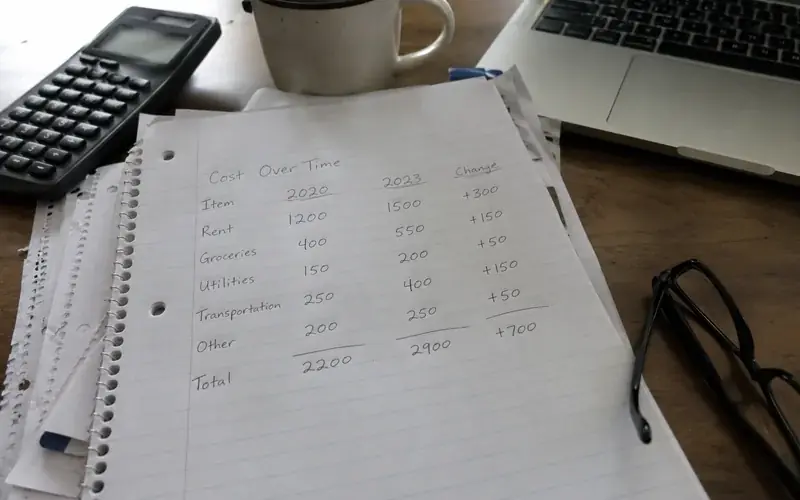
Our calculations show that factoring in the waiting period completely changes the total cost of your housing choice. Say income-restricted saves you $250 a month against a market-rate unit. The guarantee premium on that market-rate unit is $1,438.
We can break down the timeline savings into three distinct scenarios:
- Over three years, income-restricted housing wins comfortably by saving $9,000 against a $1,438 premium.
- Over eighteen months, it still wins, but by less than the raw monthly figure suggests once you account for the months spent waiting.
- We see that over six months, market rate with a guarantee frequently wins outright if the waitlist runs five months before you're housed.
Months of unstable housing, temporary accommodation, or storage costs are real expenses that don't appear in a simple rent comparison. Storing furniture alone can cost upward of $200 a month in the US right now.
We urge you to factor this waiting period into the total expense. Services like PandaGuarantee or TheGuarantors currently charge a one-time fee of 40% to 100% of a month’s rent upfront in 2026 based on credit profiles. The guide on What a guarantor program costs covers this premium side in detail.
The barrier doesn't go away either way
The real difficulty is that an affordable path isn't easier to reach if your screening record is troubled. An important correction to a common assumption is that affordable housing programs waive background checks. Rental and criminal history screening applies on top of the income test at most tax-credit and program properties.
We see that each community operates its own tenant selection plan under strict guidelines. A renter with an eviction filing faces the exact same criteria question there as anywhere, plus the burden of a waitlist. The 2026 Texas tenant screening laws require landlords to provide a written list of these criteria before accepting any application fees.
We remind applicants that the barrier work is absolutely identical in both paths and requires three key steps:
- You must document the disposition of any past court cases.
- Settling or documenting the balance of previous debts matters.
- We recommend identifying communities whose lookback window clears the filing.
While the federal Fair Credit Reporting Act allows criminal convictions to be reported indefinitely, standard industry lookback windows via tools like TransUnion SmartMove typically range from four to seven years. This means older infractions might not automatically disqualify you if you prepare properly.
We stress that none of this preparation changes based on which housing path you take. Being proactive with documentation is mandatory. Delays in providing this proof will cost you the apartment regardless of the rent price.
Running both at once
We standardly advise running both strategies simultaneously because joining lists costs nothing. Join the waitlists immediately. Apply properly, with complete documentation, so your place on the list is entirely secure.
We recommend using platforms like AffordableHousing.com to monitor centralized waitlists across Texas. Then run a market-rate search in parallel. This includes checking guarantee-accepting communities and 2x or 2.5x income properties, which frequently reach similar rents from a different direction.
Parallel searching is a risk-free strategy
We always tell clients to take a market-rate unit if it lands first. Signing a lease doesn't remove you from a waitlist. When your name eventually comes up, you can make a decision with a stable address rather than scrambling without one.
We believe that if your date is really flexible and the monthly saving is meaningful over several years, waiting is a rational choice. Just make this a conscious choice rather than a default reaction. Neither path is a guaranteed lock, as the property management makes the final decision in both scenarios.
The Bottom Line
We highly recommend starting your parallel search today by gathering your financial documents.
Secure your accurate the waitlists right now. Then aggressively vet market-rate options so you're housed before your deadline hits.